



The following article may contain affiliate links or sponsored content. This doesn’t cost you anything, and shopping or using our affiliate partners is a way to support our mission. I will never work with a brand or showcase a product that I don’t personally use or believe in.
“The President is so deeply motivated by people. He’s such a people person. He understands heartache and grief.”
-Joelle Gamble, the Deputy Director of the Biden-Harris National Economic Council on supporting this President’s vision to create change and impact lives at every level.
Turning campaign promises into tangible achievements
From the campaign trail to the White House — any election is sure to have a string of promises following them on that journey, but someone has to focus on turning those promises into action. Enter Joelle Gamble. She was part of the transition team tasked with making sure there was an orderly and peaceful transition of power from the Trump to Biden Administration. But just as importantly, she’s been part of the team that helps to get the things people voted for actually implemented.
Bidenomics, campaign promises, and policies
One of the tenets of the Bidenomics plan that has deeply affected the Financial Feminist listeners was the expanded child tax credit. Data has shown that child poverty has increased in this post-pandemic world. Joelle explains that the President’s goal was to make the expanded child tax credit permanent, but it was blocked by 212 House Republicans and 55 Senate Republicans.
“I think of government as a constant exercise in building a coalition of people to get something done because you can’t get anything done on your own, no matter how much you want to.”
One of the key things to keep in mind when thinking about campaign promises and whether or not the person you voted for is making good on them is that, for the most part, there are limits to presidential power. The system was designed to keep checks and balances so that no one branch of government retains too much power. So, as the President is trying to build that coalition of people to get something done, you run into partisanship. Joelle explains that in more recent years, has been harder and harder to build bipartisan coalitions with the divided government. “He’s going to keep fighting…by no means is he giving up on us. It’s just, it’s a real uphill battle.”
OK, but what about student loans?
Another topic that has been hotly debated for the past few years, and one that many of the Financial Feminist listeners have on their minds –– student loans. Joelle provides us with some much-needed insight into the administration’s commitment to supporting individuals struggling with student loan debt. “The student loan system is broken, and on top of that, college is no longer affordable for many people…and so, there’s been a big focus since day one, trying to do what we can administratively to help borrowers.”
Some of the current programs available to help borrowers include the Public Service Loan Forgiveness program and the SAVE plan. Joelle mentions that so far, the administration has approved more than $117 billion in debt cancellation for more than 3.5 million borrowers in the aforementioned programs and others, like the Income-Based Repayment programs and the Perfect Public Service Loan Forgiveness Program.
You can learn more about these programs and others at studentaid.gov.
Addressing economic disparities
Joelle and Tori also go on to discuss government policies for economic equity and how the Biden administration is working to address economic disparities by investing in specific regions in the United States. “When you invest in places, especially economically distressed places, the economic benefits are larger.”
This “place-based policy” approach focuses on providing resources and support to economically distressed areas, enhancing competitiveness in critical technologies. She highlights that these targeted investments are essential for larger economic benefits, emphasizing the importance of engaging local communities and various stakeholders in achieving these goals.
Keeping the government accountable
Another significant aspect of Joelle and Tori’s conversation revolves around the importance of organizing as a means to advocate for policies and accountability. Drawing from her background as a student organizer, Joelle highlights the power of grassroots movements and the role of community engagement in driving change. “Organizing is important for advocating for policies and winning elections, but it’s also important for holding government accountable.”
She encourages individuals to get involved in shaping local and state-level policies to create a meaningful impact on their daily lives.
Joelle’s insights into government policies and their impact on student loans, economic equity, family, and childcare provide a valuable perspective on the administration’s efforts to create change in the lives of Americans.
Joelle and Tori discuss all that and more on this week’s episode of Financial Feminist.
Additional Resources:
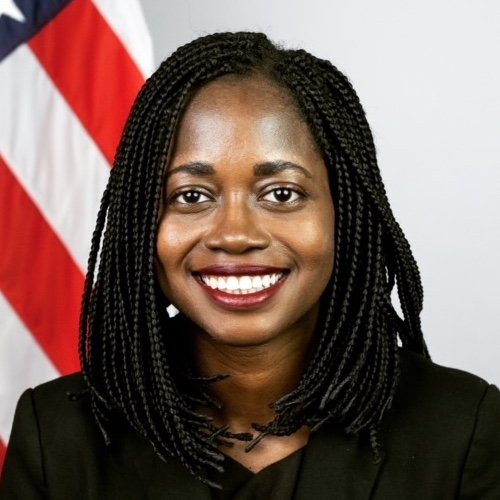
Meet Joelle
Joelle Gamble serves as Deputy Director of the Biden-Harris National Economic Council. Prior to that role, she was Chief Economist of the U.S. Department of Labor and Special Assistant to the President for Economic Policy at the National Economic Council. Joining the team on Day One, Joelle worked on a variety of issues including labor market policy, student and medical debt, and, now, industrial strategy. She joined the White House from an economic policy advisor role on the Presidential Transition. Before joining the Administration, Joelle worked as a principal for Omidyar Network’s economic program and served as a Director and Advisor to the CEO at the Roosevelt Institute.
Resources:
Feeling Overwhelmed? Start here!
Learn to Invest with Stock Market School
Behind the Scenes and Extended Clips on Youtube
Leave Financial Feminist a Voicemail
Financial Feminist on Instagram
Take our FREE Money Personality Quiz
Transcript:
Joelle Gamble:
Learning about some of the unsexy things that make the economy work has been really fascinating, and then to get to talk to the people who are really passionate about it. That’s why I mentioned all of the agencies. There’s a lot of private sector actors who are so in the weeds, in the most nerdy fun way and are willing to pitch in and help you solve a problem. It’s been really rewarding because we have seen a lot of crisis in this economy. But the thing that is always true is that whenever there is a crisis, there’s always a flood of people, even those who don’t work in the government, who work in nonprofits, who just care, who are willing to help, and it’s been a beautiful day.
Tori Dunlap:
Hi, Financial Feminist, welcome back to the show. I’m so excited to see you. If you’re an oldie but a goodie, welcome back and if you’re new, welcome. My name is Tori. I host the show. I’m a New York Times bestselling author. I’m a money expert and I fight the patriarchy by making you rich. A reminder before we get into today’s episode, subscribe, share your episode with family and friends. You know the drill. We also have a very exciting announcement, which is that our podcast won a Signal Award, and if you’re not in the podcasting space, you’re like, what the hell is a signal award? Well, it’s for podcasts and for podcasters, and we were a silver award winner for the business category. So thank you to everybody who voted. Thank you to everybody who supported the show, and thank you to our incredible team and staff who produces such a great show that is now and has been award-winning.
So just thank you for voting. Thank you for your support of the show. It means the world. We’re really excited for today’s guest. I had the pleasure of speaking with the White House before, kind of a flex. No big deal. I’m going to do it, but every time I do, I’m just so encouraged about how much this administration really seems to listen and care to the fears and anxieties and questions from our community. We had the opportunity for today’s episode to sit down with Joelle Gamble specifically to talk about the current economy and the Bidenomics plan as they call it, and how all that’s going. Joelle Gamble serves as deputy director of the Biden-Harris National Economic Council. Prior to that role, she was the chief economist of the US Department of Labor and Special Assistant to the President for Economic Policy at the National Economic Council.
Joining the team on day one, Joelle worked on a variety of issues including labor market policy, student and medical debt, and now industrial strategy. She joined the White House from an economic policy advisor role on the presidential transition. Before joining the administration, Joelle worked as a principal for a [inaudible 00:02:35] networks economic policy and served as a director and advisor to the CEO at the Roosevelt Institute. We’re seeing unprecedented growth in so many ways economically from lower unemployment to an albeit slow, but gradual increase in wages. But we know that just because the economy is doing well on paper, it doesn’t always feel like that in our day-to-day.
So we talked with Joelle about the current Biden administration’s plan on your biggest concerns like student loans, economic growth, wages and unemployment, and policies that support women and families. This is a great conversation if you want to better understand the current landscape when it comes to where the economy is, what programs are coming to help and how to continue supporting policies like those in Bidenomics at a local level, and also just a larger conversation about how our government affects our day-to-day lives and what sort of resources are at our disposal to make our lives better. So without further ado, let’s get into it. But first a word from our sponsors.
Joelle, where are you at in the world? Are you in DC?
Joelle Gamble:
I am. I’m in DC. I’m on the White House campus right now.
Tori Dunlap:
Amazing. I just went to DC for the first time last year and I loved it. Went around and did all the monuments and did all of the memorials and yeah, it was a very cool thing to do and something that I wish I had done a lot sooner. Yeah.
Joelle Gamble:
I have to ask, did you use a Segway to get around?
Tori Dunlap:
No, no. I should have. I was there with my partner and one of his good friends lives in DC and so he was our segue tour guide, the non-Segway Segway tour. We walked through all of the campus and the Washington Monument and everything. So yeah, it was great. Wish I had done it a lot sooner.
Joelle Gamble:
Wonderful. That’s wonderful. It’s a beautiful city.
Tori Dunlap:
It is gorgeous. Tell me a bit about yourself and how you came to work with the Biden administration.
Joelle Gamble:
Yes, so I am one of the deputy directors for the White House National Economic Council, and so the White House National Economic Council basically coordinates economic policy priorities for the president across the federal government. So across all the agencies and departments that make up the federal government. I ended up here from what’s called the presidential transition, which is what both campaigns will do to prepare to enter government, very low-key operations. They don’t want to talk about it. I joined it before the presidential election, so I was kind of taking risk, but see if this works out, where I was helping to figure out how to take all the campaign promises the president was making and turn them into things that could actually be
done in government. And before that, I worked in foundations and think tanks and all of that. I’m an economist by training, and so I’ve just been floating around economic policy spaces trying to figure out how to make things better.
Tori Dunlap:
Tell me more about the transition, like you were saying, it’s kind of secrets or how does that work? What do you mean?
Joelle Gamble:
Well, when I say that, I just mean it’s not something that is talked about a lot. It’s just kind of like a way to plan to enter the government. Because when you think about it between the election day November and the president being inaugurated in January, there’s only two months to get things together, and so you have a whole bunch of people who help to figure out what to do. There’s even a nonprofit organization that helps both presidential transitions from both parties structure themselves and figure out what to do. And so it’s a whole operation that exists so that there’s both the peaceful transition of power, but also so that there is an orderly transition so that what people voted for has a good chance of actually being implemented.
Tori Dunlap:
I imagine that team was a little busy in 2020, 2021 in that transition.
Joelle Gamble:
Yeah, it was a great experience to just learn how to translate aspiration into something that’s actionable.
Tori Dunlap:
Totally. We would love to talk about some of the tenets of the plan that has affected our listeners most. We know that post pandemic, we’ve seen child poverty increase again. Is there a plan to resume the expanded child tax credit or is there another part of this program that is meant to help eradicate child poverty?
Joelle Gamble:
So we saw new data, I believe it was last week from the Census Bureau, which annually reports poverty rate, et cetera, and then child poverty rate did rise, and there’s a reason for that. When the president and congressional Democrats took office, they passed a child tax credit and that cut child poverty nearly in half. It helped families actually be able to take care of their children. Just an important thing to do, and there’s a lot of economic research, it’s just a good thing, but it’s also a morally good thing to do. And so the president’s goal was to make it permanent, to make the child tax credit permanent. And as you know in Washington to do good things, it’s not as simple as actually wanting those things to happen. And so last year, congressional democrats and the president were trying to enhance the child tax credit, extend it, make it permanent, but it was blocked by 212 House Republicans and 55 Senate Republicans.
And so we saw the effects of that blockage happen this year, right? People did not have that tax credit. And so what we have to keep doing is continue to fight for it. President hasn’t given up on it. He’s going to keep fighting to restore the expanded child tax credit to give all these millions, I think tens of millions of family the relief they deserve because it’s important. Even though we’ve seen inflation fall by two thirds, if wage and incomes have still increased, there’s still so much that families need to be able to sustain themselves in the United States, which is why the president and Congressional Democrats had this policy to begin with. So that’s what happened. What we have to do is to keep fighting for it because it was a good policy that did something that was objectively good.
Tori Dunlap:
Right. Well, let’s talk about that for a second because I think if you’re either new to politics or you’re someone who is just like a casual watcher or maybe a casual voter, you think, oh, okay, the President of the United States is going to promise all of these things, and if he promises them or they promise them or she promises them, they’re going to get done. But to your point, there’s other branches of government. There’s other things that we have to think about. So talk to me a bit about even just from a cerebral level, what the approach is of I want to set this policy, but I have all of these other people who also have to vote to approve it. How does that work from the best intentions to the actual outcome?
Joelle Gamble:
I think of government as a constant exercise in building a coalition of people to get something done because you can’t get anything done on your own no matter how much you want to, and that applies to any individual member of Congress, right? There’s a hundred senators, there’s 435 members of the house. It’s a lot of people. They have to build coalitions to get things done, but the president does too. There are some things that can be done with presidential power, but there are limits on that. And we do actually want there to be limits on presidential power because we don’t want an all powerful president. That’s too much power for one person. And so the president has to do that too. And so what ends up happening on a cerebral level is you try to build that coalition, but what’s been happening, especially in recent years is that coalition runs up onto partisanship and it becomes hard to build bipartisan coalitions, which you need, especially when you have divided government or you have some members of it even at the same party who may not be on the same page about it.
And you can sometimes bill bipartisan coalitions. That’s what the president and congressional democrats were able to do for the infrastructure law that passed in 2021. There were people, the Republican Party, there were senators and there were senators in the Democratic Party who split together and figure out how to pass law, but it’s getting harder and harder to do that for policies that we know directly help families including the expanded child tax credit. And so that’s from a cerebral level what has to happen and is what’s been getting harder and harder. And that’s why when the president took office, he was like, “I really want to focus on things we can do in a bipartisan way.” Unfortunately, the other party also has to commit to doing that, so he’s going to keep fighting, but by no means is he giving up on us. It’s just it’s a real uphill battle.
Tori Dunlap:
This podcast is called Financial Feminist. We’re focused on personal financial education and viewing money through the feminist lens. And one of the things that people, our listeners are really concerned about are student loans, and they’re really, really heavy on our audience’s minds right now, and the administration has made a lot of steps to expand the flexibility of these current forgiveness programs. And can you talk about some of these programs and who they’re for?
Joelle Gamble:
Yes. Student loans have been a big priority for the administration since day one for the president, for the vice president. It’s been a big priority because like you said, it weighs heavy on people and also the student loan system is broken. The student loan system is broken, and on top of that, college is no longer affordable for many people. And so that’s just a fact of the matter. And so this
has been a big focus since day one, trying to do what we can administratively to help borrowers because the federal government does service a large number of loans for over 40 million Americans, and then pushing for reforms where we can’t through Congress, whereas we were talking about earlier, it’s tricky very fast. You have to keep fighting. So there’s been a lot of focus on a number of programs that help people.
So one area focused in the public service loan forgiveness program, which as many of your listeners know, if you’re foregoing essentially a bigger income to do a job that helps give back to the public, to your community, the US made a promise to these borrowers by creating this program to help them out. They could maybe earn more income and then pay back loans faster, but they’re not, and we also want to encourage public service. It helps people. So that’s one program that’s been a focus. There’s been a program, if you have a disability, right, there’s a program that’s supposed to help you because it’s hard for you to work to get income. If your school has cheated you and you didn’t get the education you thought you paid for, there is a program that’s supposed to help you.
None of those programs are working as they should have have, and when the president and the vice presidents took office, their department of education has been really working to fix them, to make them work better so that programs that exist that you’re supposed to be eligible for, for really good reasons are there for you. So so far they’ve approved more than 117 billion in debt cancellation for more than 3.4, roughly 3.5 million borrowers, including borrowers in the programs that I mentioned. So those facing total and permanent disability, folks who should have earned relief under the public service loan forgiveness program, which I know helped because my aunt who served in the military actually got released through that program, which was wonderful and released for those who’ve been cheated by their institutions as well. And so that’s been a big focus, including even those, I forgot to mention, under the income based repayment programs where you’ve been in the program but you were supposed to get released but didn’t get released under that income driven repayment plan too, because those are time bound at a certain point to get relief.
So that’s been a big focus is just fixing those broken programs because people rely on them. They finish college, they think, I’m going to be a teacher, I’ll qualify for this. I would say on top of that though, there’s a new program that was launched, which is I think, at this point, the most affordable payment plan ever, it’s called the New Save Plan. And so Save is a really, really generous income-based plan where you only pay 5% of your discretionary income towards your undergrad loans. It was 10% before, and then more income is considered non-discretionary, which actually has the savings, right, because it’s discretionary income. So there’s another role there, and then the average borrower would save like a thousand dollars a year if they’re on this plan. And then for some borrowers, their monthly payment goes to zero, and for a lot of other borrowers, you’ll also get payments cut in half. And so that’s the new program that was released this year to help borrowers just afford their payments.
Tori Dunlap:
Where is someplace that a listener can go to to learn more or to figure out what plan is right for them?
Joelle Gamble:
Student aid gov is like home base, right, for [inaudible 00:14:50] student loans. And if they’re interested in the safe planning of studentaid.gov/save, you just have to log on and the application takes around 10 minutes.
Tori Dunlap:
Amazing. We were talking before about inflation and inflation is down. You mentioned that before, yet, I think for a lot of people it doesn’t feel down. Inflation doesn’t feel like it’s increasing. Can we talk about the Inflation Reduction Act and how inflation has been reducing without causing a recession over the last year?
Joelle Gamble:
Inflation is a tricky challenge from an economic policy standpoint. As you mentioned, inflation is going down. What we’re talking about is not necessarily prices going down, but price increases slowing because inflation is measuring the change in prices. In some areas, prices can fall. You see that in some groceries. You see that in gas prices, so gas prices are very volatile for a lot of reasons. But in other places, really what we have to focus on, and that’s been a focus of the president, is improving the cost of living overall and supporting access to good jobs where people can see their wages grow, so your paycheck can stretch, but you don’t have to stretch it as far it can grow rather. That’s been really, really important. And the first piece about improving the cost of living overall is why the Inflation Reduction Act, I think, is so important.
I think we talk a lot about it as a climate bill in many ways. It is, right? It’s making critical investments in clean energy manufacturing that will create a lot of good jobs for people. It’s projected to create more than 1.5 million additional jobs to the next decade according to some estimates from some think tanks, but it’s also doing more than just investing in our ability to produce technologies that help fight climate change. It’s also got provisions that actually help lower energy costs for families, and it’s got some provisions on the healthcare side that I think are really important, including payments that will help an extension of the Affordable Care Act, subsidies that will help Americans. I think over 15 million Americans save about $800 a year on health insurance premiums, and then of course for our seniors, it helps cap the cost of insulin for seniors on Medicare to be just $35.
Of course, wanted more, wanted to be cap for everybody, including those in the private market, but progress was made there and that’s going to help 4 million seniors. I think the other piece that’s important here, it isn’t necessarily about cost of flipping per se, but it’s about fairness, which I think is also something that comes up when folks are worried about making payments, paying the bills, et cetera, and that’s the pieces that are about making the wealthy pay their share. So it helps.
The Inflation Reduction Act also enables the IRS to crack down basically on wealthy tax sheets as the presidents to say, to crack down on tax evasion. It essentially gives the IRS more resources to go after wealthy and big corporations who can evade taxes because they are well-resourced, and that will also help improve services because there’s money for improving IRS technology that can help folks who are just trying to do the right thing, pay their taxes on time, et cetera. The IRS session mentions also piloting a filing program on its own website, which is really important. That would be free because there’s all these kinds of companies out there that argue that they’re making filing your taxes easier, but they’re just charging you a whole bunch of money for something that federal government can also make easier for you.
Tori Dunlap:
People can’t see me, but I’m nodding emphatically and I’m like, yes-anding over here quietly. Is there something that we can point to to say, okay, things are going to continue to get bett
er when it comes to inflation?
Joelle Gamble:
I think inflation is genuinely improving. We saw in the August consumer price index report, that’s just one of the inflation measures that federal government produces, and I can go down a long wonky rabbit hole about that if you so desire, but we saw in August that core inflation, which is the most important measure of inflation, is still trending downward toward pre-pandemic levels and core inflation is important because there are some prices in the economy that are just volatile. I mentioned gas prices. Those are one. Energy prices are volatile. There are lots of things that affect the energy supply, and so you don’t actually want to look at just energy prices to understand what’s happening in prices overall. Food is also similar, but core inflation looks at the things that tend to be steady and tend to tell you where overall prices are moving in the economy.
So think of things like housing, that’s a big part of core inflation. And so we saw core inflation fall to about 2.4% over the last three months in August, so that’s the lowest level in two and a half years. Good news for that underlying inflation measure. It gives you a good sense that there is some positive momentum here, and then overall, inflation is falling like 16% since last summer, and so it’s in progress. I think what’s really important for folks, as I mentioned earlier, is to also continue to see wages grow and people have access to quality jobs that they can raise a family on, which is in part possible because we have a labor market that’s very strong. We’re seeing inflation fall while employment remains pretty strong. Traditional macroeconomic theory would suggest that those two things are intention, that you have a trade-off between the unemployment rate being low and inflation coming down, but we’re seeing inflation coming down and unemployment rate remaining low.
It’s been below 4% for the longest period of time I think it’s ever been below 4%, like the last 50 years. And so that’s another just a huge focus. The labor market itself is strong, which is good. And then the president’s plans to create good paying jobs, especially in some of these key industries that are important to the future, important for fighting climate change, I think it’s also a part of that because we want the US to be able to compete on these technological frontiers, these critical industries that help us protect the earth and keep the climate reasonable for future generations, but also have what’s called an economic spillover effects.
So when you build a manufacturing plant, you’re not just creating jobs in manufacturing plant, you’re creating jobs all up the supply chain, people who make the parts that go into the final product. You’re creating service sector jobs that are services that work with that manufacturing plant. You’re bringing income into the community that isn’t spent in the community. That is actually creating demand, create more jobs. So there’s just this whole kind of ripple effect that happens when you make critical public investments in this way.
Tori Dunlap:
I’m really glad you highlighted that because even in prep for this episode, one of the things Kristen, our producer and I were talking about was this feeling of things in many ways seem tough. Yet, unemployment is at an all time low for the past, what did you say? 50 years? A hundred years? And also inflation’s going down, which I think is really important to remind folks of. One of the studies or a bunch of studies we looked at have shown Americans are currently spending beyond their means and that their excess consumer savings are going down. The credit card debt, the car loans are at a record high. Is there a plan for this in Bidenomics?
Joelle Gamble:
So I think part of what’s happening is we reached near record lows for a number of these measures in 2023, and I think what we’re seeing is kind of a normalizing of these trends because when the pandemic happened, we had this unprecedented response that came with frankly a bunch of consumer protections that I think are actually less talked about than the stimulus checks. But there are a bunch of consumer protections, whether it was student loan debt or credit card debt, mortgage protections, all of these things that kind of help stabilize families while we were going through this frankly national trauma. So now we’re starting to see some of these measures including credit card delinquencies rise. They’re slightly above their pre-pandemic levels, but they’re kind of in line with historical averages. I say that because that is where the parts of Bidenomics that are about competition and fairness and frankly leveling the playing field are important.
So the Consumer Financial Protection Bureau, for instance, it’s been doing a lot of rulemaking and frankly, investigations in the credit card space for a reason, right? These products are not always the best products for consumers, but they’re sold to them as though they are. They don’t always have the best terms, the fairest terms. And so there’s a kind of systemic issue that has to get corrected here that wasn’t corrected by the pandemic response, but we can make progress on it even if Congress hasn’t been ready to act yet through some of the regulatory agencies within the administration, some of the appointees there who have a very focused agenda that is very reflective, I think, of what consumers are actually feeling. I would also say that as there is a lot of spending, it does seem like there are some positive signs or some confidence, I would say, in folks’ own financial position. Not to say that everyone is [inaudible 00:23:57], of course, we all went through several crises collectively.
Tori Dunlap:
Once in a lifetime crises over and over and over again.
Joelle Gamble:
Over and over and over again. That were affecting our feeling of safety or public health crises, economic crises. I’m a millennial, so I’m just like, okay, this is just kind what seems to happen like I feel like.
Tori Dunlap:
Me too. Nothing like the once in a lifetime, once in a generation crises is about every eight years. You got to love that.
Joelle Gamble:
And the accompanying headlines are great, and then it’s like, oh, why do you keep buying avocado? It’s like, because I-
Tori Dunlap:
That’s literally it. I don’t know how much familiar you are with our work, but that’s our whole thing is we talk about stop telling people to stop buying lattes. It’s not the latte, it’s the systemic oppression.
Joelle Gamble:
Right. Yes, I hear you. I say this as I have my one coffee a day.
Tori Dunlap:
Which great. Coffees are not the reason you can’t afford a house.
Joelle Gamble:
No, I hear you. I say all that because often folks will say, “Well, the economic numbers are so good. Why do
people not feel good?” I say, well, first of all, there’s a lot going on in people’s lives. Some of it is the ability to find a job or not. I would say labor market’s local, so actually don’t just look at the national unemployment rate, local unemployment rates too, there’s some variation there. They’re still low, don’t get me wrong, but depending on where people live, they’re having different experiences, which is why the president is so focused on his forward leaning agenda, continuing to make sure that everyone benefits from the historic legislation that was passed. But also at the same time, it takes time for people to heal and for some of these top line numbers to actually be realized in people’s lives and for policies to actually be realized. And so we’re seeing, for instance, inflation is slowing, wages have to continue to rise, and then things start to balance out over time, you reach more equilibrium and it starts to feel normal. That takes time.
Tori Dunlap:
If we’re thinking about the government or the system as a human being, I’m still reeling emotionally from the pandemic. I still don’t know how to navigate my life now after going through that. I imagine the government’s trying to figure that out too. How do we continue to support people after this huge once in a lifetime crisis?
Joelle Gamble:
Yes, absolutely. And we’re always, I mean, that’s part of my job here and part of the job of the administration is to keep pushing for ways to help people. The other thing I would say is it depends also on what question you ask because the labor market has been strong for a while, and that’s where you see pretty high job satisfaction numbers. But if you ask people to pontificate about the economy or you ask them about prices, you get different responses because for the last two years, everyone’s been saying it’s going to be a recession. Didn’t see that. It means we should still keep our eye on the ball. But there was a whole conversation where everyone was told that the economy was bad, and then inflation is real.
And so it takes time for folks to adjust and for the work we’re doing to keep the strong labor market in the US strong to actually take a second for people to see the wages rising. And then like I mentioned with the Inflation Reduction Act, the measures we’re taking to raise the standard of living and lower, the cost of living overall are not immediate. That’s the challenge I think, with trying to do things at a scale of the United States. So I’m not one to say, though they just don’t understand that the unemployment rate is low, but people feel what they feel, and it’s our job to continue to help them and make sure that they can take advantage of all the opportunities in this country that we’re trying to create.
Tori Dunlap:
I appreciate you saying that. One of the things that I think about a lot and that I know our audience thinks about a lot is family leave. What kind of policies is the Biden administration pushing for and how will those help families? And I especially am looking at mothers.
Joelle Gamble:
Yes. So there’s a lot that’s been happening in this space. Of course, there’s always more we need to do. I used to work at the Department of Labor before I worked here at the White House, and I was there when we celebrated the 30th anniversary of the Family and Medical Leave Act, which is a landmark that helps Americans take up to 12 weeks of unpaid leave from work when they’re ill to care for a new child care, to care for a sick family member without the risk of losing their job. In many ways, it’s kind of foundational legislation to protect folks. And when we celebrated the 30th year of the Family Medical Leave Act, MLA, as people like to call it, the administration issued a presidential memorandum to support federal employees’ access to leave, because I’ve mentioned the limits of presidential power, for instance. One thing that president and vice president can do is try shape personnel policies for federal employees.
Of course, we always have the goal of actually helping as many people as possible, but that always requires an active Congress. And so that was important because it’s building on other administration efforts to improve access and awareness of family and medical leave. This is one area that I will say that Congress made some progress, not as much as they would’ve liked, but they did make some progress. So Congress passed the Worker Fairness Act and the PUMP Act for Nursing Mothers. I believe that was just earlier, it was either earlier this year or very late last year, and made some significant investments in childcare. So under the Pregnant Worker Fairness Act, now employers have to make reasonable accommodations with pregnant workers and job applicants, whether it’s light duty or being able to take more breaks or accommodations to help make sure that they’re comfortable without discrimination or retaliation. Now, it’s kind of in some ways ridiculous that-
Tori Dunlap:
We had to pass a law.
Joelle Gamble:
… we have to do that.
Tori Dunlap:
Yeah.
Joelle Gamble:
And we were talking about the state of bipartisanship today. This wasn’t something that was able to get done on a bipartisan basis, but they get done. And it’s important because this is where the executive branch can take action, right? Giving, for instance, the Department of Labor right now, which is full, a lot of folks who are very, very, very pro worker can help enforce that law, giving them more levers to pull to help workers. The other piece of legislation that’s passed is that Providing Urgent Maternal Protections Act, which is the PUMP Act, everything of course, has to have an acronym that hides a really long bill title. So it’s the Providing Urgent Maternal Protections for Nursing Mothers Act, and that extends break time and private space protections for nursing parents. So extends it to nearly 9 million more workers, including teachers and nurses and farm workers.
The farm worker piece is particularly important because historically, our labor laws have not protected farm workers or domestic workers. And so this will be really important so that parents don’t have to choose between their job and their infant’s health. Again, things we need. In some ways, baseline, but we are moving the needle. And the other last piece in this space that I think is really important is that the administration did manage to secure 30% increase in funding for the Childcare Development block grant, which could help up to 130,000 more families afford childcare and access to better childcare health options. The president has a more ambitious agenda on childcare, of course, but again, government is building these coalitions. We’re moving the needle as quickly as we can. I think this is another good step because as we know, especially with what people experienced during the pandemic, childcare is so important for children, but it’s also important for working parents.
It’s important for working parents who don’t want to see a ding to their lifetime expected earnings because they had to leave the workforce to care for a child. They want to care fo
r a child, that’s great, but we want people to have options. It’s also, I think, important because we don’t just want childcare. We want quality childcare. And so this is the kind of program that can help with that, at least somewhat. So there’s a lot that got passed. There’s a lot that still needs to get passed, that the president is still advocating for. I mean, that’s basically where we’re at.
The president is committed to continue to push for national paid family leave and medical leave programs, paid being the operative word here. The FMLA is unpaid, getting more fullsome support for childcare in the United States, support for care workers as well, protections for care workers. There’s still a lot to be done here, and he wants to do that because we know that families need it. And there’s just economic evidence that supports this as good policy, which always what gets me is evidence is there. Even if you don’t believe in the moral case, even if you don’t believe all the people who are telling you to do this, because it’s going to help them in their day-to-day lives, there’s just so much evidence this is a smart economic policy. So that’s why we’re going to keep fighting for it.
Tori Dunlap:
One of the things that’s always impactful for me is hearing any specific stories or examples you have from people or situations that as you’ve been doing this work and building this plan that you’ve interacted with, so is there any examples of stories that have been really impactful for you or impactful as you’ve progressed in this work?
Joelle Gamble:
So I didn’t mention this, but I work on manufacturing and supply chain policy in the White House.
Tori Dunlap:
Cool, sexy, exciting.
Joelle Gamble:
Yes. So I’ve worked on student debt in the past and was at the Department of Labor, and so some of the other areas are familiar to me, but the thing that I do on a day-to-day basis is talk to manufacturers who are very interesting community to work with. I’m learning a lot, frankly. It’s been really rewarding. One thing that I really enjoyed about the work is, I think there’s probably two things. One is when people send letters, so people will send letters to the president and sometimes they’ll pick a few and they’ll send them to the staff. It’s really awesome because in the day-to-day, you mostly get bombarded with press stories and people who are frustrated with you for understandable reasons.
But then someone will write a letter saying that they got their loan forgiven because they got a waiver from the public service loan forgiveness program, or they benefited from the child tax credit and they really wants to keep fighting for it, or they are going to try and apply for a job at the new facility that’s opening in the community. It makes it feel so much more real, and it can be kind of abstract sometimes in government when everything is politics. But then you remember.
Tori Dunlap:
I’ll say we, I mean the work we’re doing, I like to think it’s similar, but you guys are having a much bigger impact. But I have to do the same thing because we get a lot of hate online. We get a lot of people who don’t like the work that we do and don’t like that we use the word feminist and we talk about all of that. And so we literally have in our Slack channel called Nice things. And so when people say, you helped me pay off my student loans, I’ve saved my first thousand dollars. I negotiated my salary for the first time, or, yeah, I just feel so much more confident about my money now when I’m having a rough day. That’s where I go to read those. And to your point about the abstract nature of it, it makes it a lot more concrete of, okay, we are making a difference. We are working to help change people’s lives. So yeah, it’s really important to be reminded of that in the midst of the day-to-day grind, especially when there’s a lot of people out there who are not very kind.
Joelle Gamble:
And that’s something I think that’s always helpful to remember is, you never know what people are going through.
Tori Dunlap:
Yeah.
Joelle Gamble:
Just kind of try to do what you believe in. And in this building, we’re supporting the mission of the president. President is so deeply motivated by people. He’s such a people person. He understands heartache and grief more than I ever had experienced in my life, and is always so focused even when there’s a lot of hate coming his way or-
Tori Dunlap:
Noise, yeah.
Joelle Gamble:
… lot of noise, a lot of noise, lots of, can he do it? Can he do it? We don’t know. And then things tend to come through. So it’s always helpful to stay humble, and I think he really, as a leader, helps us do that. The other thing that I’ve just found to be so interesting about the work is to understand all the different kind of offices and agencies in the federal government who do things that help people and the ways in which coordinating them better actually makes something happen. And I say that in the abstract, but I mentioned I work in supply chains, and I think a lot of people learned about supply chains in 2021, 2022 when certain goods weren’t available and everyone was trying to explain-
Tori Dunlap:
The Panama Canal is blocked and we can’t.
Joelle Gamble:
It’s like, why is the fact that there’s no rain in this region of the world affecting whether or not I can get whatever product it might be, or everyone learned what a semiconductor ship was, and that was in everything we use. And learning about some of the kind of unsexy things that make the economy work has been really fascinating. And then they get to talk to the people who are really passionate about it. That’s why I mentioned all over the agencies, there’s a lot of private sector actors who are also just so in the weeds, in the most nerdy fun way and are willing to pitch in and help you solve a problem. That’s been really rewarding because we have seen a lot of crisis in this economy. But the thing that is always true is that whenever there is a crisis, there’s always a flood of people, even those who don’t work in the government, who work in nonprofits, who just care, who are willing to help. And it’s been a beautiful thing.
Tori Dunlap:
What are some of the pillars of this plan that the administration is most excited about? And maybe for you, what excites you the most?
Joelle Gamble:
There’s so much to be excited about because there’s so much we can still do to help folks. I’ll say, I think there’s two things that I’m excited about. One is that we have all of these new programs that are going to help a lot of different communities across the c
ountry. So I work on manufacturing supply chain policy. I also work on what’s called Place-based policy, which is an aspect wonky term for specific programs that help specific places for certain reasons, meaning we have this plan to help a number of region in the United States become competitive in critical technology. It’s about specific places, getting specific resources versus one size fits all national policy. And I find that to be really exciting because we know from the economic evidence that when you invest in places, especially economically distressed places, the economic benefits are larger. And so this is an opportunity to help places that have been left out or left behind by failed economic policies and really help them and they’re already doing the work.
Federal government’s just one element of this. The state governments, the local governments, community leaders, workers, small businesses, all are a huge part of the story. But to help them get [inaudible 00:39:07], attract industries that could be helpful, make sure community members can get access to high-speed internet. Rebuild the bridge that has been a source of anxiety every time people drive over it. All of these things that we are doing to help specific places are so exciting to me because places are where people live. People don’t live in a national outlet. So that’s super exciting to me. And it’s partly exciting because it’s about implementation or it’s about getting government right. Talking to people, listening to what’s working’s, not working. It really is like the act of governance. There’s still politics to it, but it’s less bat fighting and more about how do we do the right thing by as many people as possible.
So I would say that that’s very exciting to me. And then I would also say just the president’s laser focus on supporting folks’ right to organize is also very exciting to me. There’s a lot of evidence that unions are beneficial for workers within them, but also help reduce inequality, which increases economic stability and supports growth. There’s a reason why we’re so pro-Union, and I find that exciting because across the federal government, there are so many folks who are creatively trying to find ways to make sure that folks’ right to organize are protected. And the president’s commitment to continually push Congress to actually further protect those rights, I think is just very inspiring. I see it as a constant type of conversation here every day. So I would say that those are probably two of the things that are very top of mind for me, and that I find exciting.
Tori Dunlap:
Again, can’t see me nodding emphatically. What can we as individuals and as a community do to support progressive policies like these?
Joelle Gamble:
I think there’s a few things that could be done. I started my career as a student organizer, so I actually think organizing is important. It’s important to invest people into a bigger purpose, but do so in a way that reflects their needs and priorities. So organizing is that hard work of coming up with a shared vision and trying to fight for it, organized towards outcomes that help you achieve that shared vision. So it’s actually inherently reflecting what people care about, not just top-down agenda. So I think organizing is important because people pay attention when someone they know tells them to pay attention. I can jump up and down [inaudible 00:41:27]. A lot of people probably wouldn’t listen to me and I understand why. But when you actually bring in people you know, you are actually building a lot of power that way, a lot of awareness in someone who’s paying attention. I think organizing is so important because yes, organizing is important for advocating for policies and winning elections. It’s also important for holding government accountable, even if you are a Democrat and this is a Democratic administration, that’s still important to do.
And so I would say that that’s probably one of the first things that I think is a good thing to do. Actually, I think that’s the main thing to do, is to talk to people, to organize. And then I guess the second thing would be to learn about what you can do at the local or state level. There’s a lot of focus in the country on national politics. There’s kind of almost like [inaudible 00:42:20] around it, even around the White House. There’s so many movies and TV shows where we kind of just glamorize the idea of the presidency, but a lot of state governments, a lot of county executives and mayors are so important in changing our day-to-day lives. And so figuring out what’s going on in your local community is an excellent place to start.
Tori Dunlap:
We’ve talked about that almost ad nauseam on this show of, yeah, the presidential election, important, national elections, important. What happens in your community is going to have a way bigger impact on your day-to-day life and on your family than what’s going on at the national level.
Joelle Gamble:
I agree. I, of course, think that what we’re doing here, the White House administration is of course incredibly-
Tori Dunlap:
Oh, of course.
Joelle Gamble:
… but we cannot forget about local and state government.
Tori Dunlap:
It was interesting you mentioned White House and Media because my last question for you is a fun question, and I don’t know if we can include this. So tell me if we can’t, what is your favorite fictionalized version of the White House?
Joelle Gamble:
If I’m going to say this, but it’s not because I think it’s what the White House is actually like.
Tori Dunlap:
Are you about to say Veep?
Joelle Gamble:
I’m going to say Scandal, actually.
Tori Dunlap:
That was the other one I was hoping you would say, I love Scandal. So, so good.
Joelle Gamble:
It’s just a good, it’s like an entertaining show.
Tori Dunlap:
Oh, yes. What is it? If you want me, earn me. Like it’s great.
Joelle Gamble:
And none of this, that’s not at all an accurate depiction of the White House, but I just think, it’s an entertaining show. And as a black woman in politics, I just liked that she was kind of in control of her life. She was the one making the moves.
Tori Dunlap:
Totally.
Joelle Gamble:
And that’s a very rare depiction in media, especially in portrays of politics, right?
Tori Dunlap</str ong>:
Yeah.
Joelle Gamble:
Loved it for multiple reasons, but not because it’s accurate.
Tori Dunlap:
I watched every episode of that show. I loved it. That was great. Thank you for your time. Thanks for being here.
Joelle Gamble:
Thanks for having me.
Tori Dunlap:
Thank you so much to Joelle for joining us. Such a cool thing to literally speak to somebody working at the White House involved in all of these capital B, big capital D decisions. So we appreciate her time and the Biden Administration’s time in answering our questions. She gave a bunch of resources of how to take advantage of these programs, how to learn more, and we’ll link them all in the show notes. Thank you so much for being here, Financial Feminist. Hope you have a great day ahead, and I’ll talk to you soon.
Thank you for listening to Financial Feminist, a Her First $100K podcast. Financial Feminist is hosted by me, Tori Dunlap, produced by Kristen Fields, associate producer Tamisha Grant, marketing and administration by Karina Patel, Sophia Cohen, Kahlil Dumas, Elizabeth McCumber, Beth Bowen, Amanda Leffew, Masha Bachmetyeva, Kailyn Sprinkle, Sumaya Mulla-Carillo and Harvey Carlson. Research by Ariel Johnson, audio engineering by Alyssa Midcalf, promotional graphics by Mary Stratton, photography by Sarah Wolfe, and theme music by Jonah Cohen Sound. A huge thanks to the entire Her First $100K team and community for supporting the show. For more information about Financial Feminist, Her First $100K, our guests, and episode show notes, visit financialfeministpodcast.com.

Tori Dunlap
Tori Dunlap is an internationally-recognized money and career expert. After saving $100,000 at age 25, Tori quit her corporate job in marketing and founded Her First $100K to fight financial inequality by giving women actionable resources to better their money. She has helped over one million women negotiate salary, pay off debt, build savings, and invest.
Tori’s work has been featured on Good Morning America, the New York Times, BBC, TIME, PEOPLE, CNN, New York Magazine, Forbes, CNBC, BuzzFeed, and more.
With a dedicated following of almost 250,000 on Instagram and more than 1.6 million on TikTok —and multiple instances of her story going viral—Tori’s unique take on financial advice has made her the go-to voice for ambitious millennial women. CNBC called Tori “the voice of financial confidence for women.”
An honors graduate of the University of Portland, Tori currently lives in Seattle, where she enjoys eating fried chicken, going to barre classes, and attempting to naturally work John Mulaney bits into conversation.
adthrive.cmd.push(function()
);