

What if the reason you’re afraid of building wealth has nothing to do with you, and everything to do with a system designed to keep you that way?
In this episode, I’m pulling back the curtain on something most people won’t say out loud: the reason so many women are afraid to build wealth isn’t a personal failing, it’s by design. From the fears holding us back before we even start, to every way my own financial success made me a “bad woman” by the patriarchy’s standards, this episode is giving you permission to stop apologizing for wanting more. Because every dollar you earn, save, and invest? It’s a vote against a system that never wanted you to have it.
Key takeaways:
Fear, obligation, and guilt (FOG) are block women from building wealth
FOG (fear, obligation, and guilt) is the framework I use to describe why so many women struggle to even begin pursuing wealth. The fear shows up as worry about becoming a bad person or making the “wrong” financial move. The obligation comes from being socialized from toddlerhood to put everyone else’s needs before our own. And the guilt? It hits from every angle: guilt for doing better than your friends, your parents, your community, and guilt when you stumble. These aren’t personal character flaws. Women are specifically taught to feel this way so that the pursuit of wealth feels selfish, greedy, and wrong.
Female financial dependence is a feature of the patriarchy
There’s a “good woman checklist” society hands us early. Don’t ruffle feathers, don’t take up too much space, don’t ask for more than you “deserve.” That checklist exists to keep women financially dependent because a woman who doesn’t need a man economically is a structural threat. Women couldn’t even get a credit card in their own name until 1974. The wage gap, the wealth gap, the mountains of unpaid labor, none of that is accidental. It protects a system that profits from women’s inaction and from keeping us too tired, too scared, or too broke to push back.
Wealth doesn’t transform who you are, it amplifies it
One of the most important reframes in this episode: money doesn’t turn good people bad. It works like a volume knob, not a transformer. The generous person with wealth can now give at a scale that changes lives. The anxious person can finally design a life that removes the triggers sending them back into scarcity. Staying broke doesn’t make you virtuous. Opting entirely out of the system doesn’t hurt the patriarchy or the billionaires. It only hurts you. The question worth sitting with is: who are you when the friction is gone?
Getting rich made me a “bad woman” by every patriarchal standard
Building wealth has made me intimidating in dating (because I don’t need a partner financially), it made me stop asking anyone’s permission to spend, travel, or make decisions, it gave me the ability to say no to toxic jobs, bad clients, and unsafe situations, and it gave me the platform and financial security to say my political opinions out loud without fearing for my livelihood. A wealthy man is called powerful. A wealthy woman is called “a lot.” All of those things make me exactly what the patriarchy is afraid of.
A financial education is your most powerful form of protest right now
This isn’t abstract. In a political moment where rights are being stripped and power is being consolidated by the already wealthy, I need money to be in the hands of people who are generous, community-oriented, and who actually give a damn. You cannot fight a system when you’re broke, exhausted, and deep in scarcity mode. Pulling yourself out of scarcity isn’t selling out. It’s what gives you the bandwidth to pay attention, show up, and push back. Building wealth is how you get a seat at the table and the energy to use it.
Notable quotes
“Having money doesn’t change you, it just shows you who you truly are.”
“You’re not bad with money, you just feel bad for pursuing money because society has made you feel that way.”
“Every dollar you earn, save, or invest is a vote against a system that never wanted you to have it.”
Episode at-a-glance
00:00 Intro: Why Women Fear Wealth
01:57 FOG: Fear, Obligation & Guilt Explained
04:50 Money Avoidance & the Ostrich Effect
05:25 The Key Reframe: You’re Not Bad With Money
06:00 The “Good Woman” Checklist
06:38 Female Financial Dependence Is by Design
08:45 The Data: Wage Gap, Wealth Gap & Unpaid Labor
09:34 You Still Have to Play the Game
13:05 Tori’s Personal Story: Building Wealth Fast
13:48 “Money Doesn’t Change You — It Shows You Who You Are”
16:31 Wealth as an Amplifier, Not a Transformer
17:25 Staying Broke Doesn’t Make You Virtuous
20:45 How Becoming Rich Made Me a Bad Woman
28:35 I Became Dangerous to Anyone Who Benefited From My Smallness
29:27 The Double Standard: Wealthy Man vs. Wealthy Woman
Thanks to Rocket Money for sponsoring this episode!
Thanks to BetterHelp for sponsoring this episode!
Visit https://herfirst100k.com/ffpod to find any resources mentioned on our show!
Listen to Erin Gallagher episode on being an uncontrollable woman: https://herfirst100k.com/financial-feminist-show-notes/inner-mean-girl/
RESOURCES:
Looking for accountability and deeper financial education? Join the $100K Club
Our HYSA Partner Recommendation (terms apply)
Behind the Scenes and Extended Clips on Youtube
Leave Financial Feminist a Voicemail
Financial Feminist on Instagram
Take our FREE Money Personality Quiz
Transcript:
Tori Dunlap:
Society has a rule book for what makes a good woman, and you guessed it, how we should talk about, make and spend money is most of it. But before we get there, we need to ask an even more uncomfortable question: Why are women afraid of building wealth in the first place? If you’re new here, my name is Tori. I’m a multimillionaire money expert and I’ve helped over five million women be better with money, and I am the poster child for the unabashed pursuit of wealth, but it hasn’t made me the most popular. Today we’re talking about why women are afraid of money, why pursuing wealth actually made me a bad woman and how we can say fuck it anyway. But first, a word from our sponsors.
So before we get into any of that, we have to talk about the before, why so many women never get rich to begin with. As we talked about many times on this show, pursuit of wealth and really becoming wealthy is not about hoarding money, it’s not about accumulating wealth to the point of exploiting people or gatekeeping others or just having a pile of cash because it’s nice to have a pile of cash. Wealth means options. Wealth means choices. When you have money, you have the ability to say no to things you want to say no to and yes to things you want to say yes to, and you are never forced to be in a situation that feels unsafe again because you can always afford to get out of it. When we talk about the pursuit of wealth and we talk about how we think about a financial education, many other financial experts are going to tell you that the reason you’re not rich is because you’re not working hard enough.
And we’ve disputed many, many times on this show that you can be working really, really, really hard and also still not be financially solvent, financially ahead, and that is because of the system that exists. Because of systemic oppression, there are many, many reasons why you might be pursuing wealth and might be doing all the right things but still have a harder time. All of that being said, when we look at why women are afraid of pursuing money, the concept of FOG comes up a lot. FOG is an acronym in this case, fear, obligation, and guilt. This concept of FOG is the number one thing I see women struggle with in their pursuit of wealth because it blocks women’s healthy relationship with money and it slows that ability to build wealth.
Let’s talk about F in FOG first. That fear is so common with women because research shows that women are likely to fear the destructive impact of money on our relationships and our personal values, but also we’re so afraid of doing the wrong thing, we’re so afraid of making a financial mistake that could wipe us out tomorrow or that fear that maybe people won’t like us anymore. And that comes down to we think rich equals being a bad person. We’ve all met bad rich people. We see them every day on the news. There are plenty of terrible people who happen to have a lot of money or really what we infer from that is that the money is the thing that made them bad. That rich equals bad person equation is a narrative that women have been fed time and time again.
Let’s talk about the O, obligation. There’s an obligation that we feel to everybody else before ourselves. And as I’ve discussed many times on the show, but also in the first chapter of my book, Financial Feminist, research shows us that we teach girls even at the young age of two, three, four to constantly be putting others above themselves. That’s what we deem valuable in women. We are meant to believe that everybody else’s needs are more important than our own and that our value to society is the way in which we nurture. Think about the toys women, girls are stereotypically given. Dolls, Easy-Bake Ovens. We are told that our value to society is in how we nurture and take care of others. So no wonder that obligation creeps up when faced with the very real decision of, do I help out my family? Do I help out the world that feels like it’s turning to shit all the time or do I take care of me? Those things seem at odds with each other. It’s either one or the other. It’s this double bind narrative that we believe.
Finally, let’s talk about guilt. This is the number one emotion. Yes, the fear, the obligation, the shame, all of that’s there, but the guilt. Again, guilty if you’re doing better than somebody else. Guilty if you’re not doing well enough. The guilt is huge. We see this guilt all of the time with women. The guilt that you are doing better than your friends and the people in your life. Guilt that you’re doing better than your community, or even maybe better than your parents did, or the guilt that you’re not doing well enough. The guilt that you spent money, the guilt that you made a mistake, the guilt that you went out to eat when you were in debt. This guilt is so, so common, and this is the thing that absolutely derails our ability to build wealth.
We also have to talk about the money avoidance that happens with women, the ostrich effect. We talk about this a lot, but this feeling of burying your head in the sand, acting like your problems don’t exist, this disproportionately affects women and it leads to this feeling of losing confidence and opportunity because you keep putting it off. You’re like, “You know what? I’ll handle that later. I’ll figure that out later,” and what it actually just does is cripples your relationship with money. It derails your progress and also separates you from your money in a way where it no longer feels personal anymore. The key reframe here is women aren’t afraid of money because they’re bad at it. You’re not bad at money. Money is a teachable, learnable skill. Rather, women are afraid of money and of the pursuit of wealth because they are specifically taught to be.
You’re not bad with money, you just feel bad for pursuing money because society has made you feel that way. You believe that the pursuit of wealth is a bad thing. You think it’ll make you a bad person. You think it’s selfish, you think it’s greedy and that’s not an accident because at the end of the day, society wants you to be a good woman. They want you to be a controllable woman. A good woman is everything society has handed us. It is the good woman checklist that gets delivered even at a toddler age for girls and women. This good woman checklist is you not ruffling any feathers, you’re not asking for more than you “deserve,” I’m putting that in quotes, you being a good girl, staying in your lane, not asking for too much, not taking up space.
This is the good woman checklist and ultimately female financial dependence is by design. A good woman doesn’t start a business. A good woman doesn’t ask for a raise. A good woman doesn’t invest. She makes a meager amount of money that she budgets very closely and she relies on a man for the rest. Whether that’s a husband, a father, someone else, a boss, that is now where you put your financial standing. A woman who doesn’t need a man economically, she’s a structural threat. Think about women who live unabashedly. Society hates them. Society hates me. An uncontrollable woman is the patriarchy’s worst nightmare, and I love being the patriarchy’s worst nightmare, but it’s not a fun time. Yes, I’m fulfilling my needs and my goals and doing things that feel right to me, but it makes people deeply uncomfortable because that is not the role we’ve been conditioned to play as women. We have been conditioned to put everybody’s needs above our own, to never speak up when we feel like something is wrong or something is amiss or something feels disconnected, and money is like the pinnacle of this.
Your pursuit of money, you wanting money is deemed villainous by the very people who want to make sure that they maintain the money and the power. This is not an accident. The very people who already have the status and who already have wealth and who already have power, the patriarchy, benefit from making you believe that money is bad and that the pursuit of wealth is bad and that asking for more money or starting a business or doing well financially is bad. That staying in a nicer hotel is bad, that having more money so you can be more generous is bad. All of these things are deemed bad. That’s not an accident. The data proves this. We have the wage gap and the wealth gap and so much unpaid labor as women. These numbers actually just protect a system that exists that is profited off of women’s inaction and unpaid labor forever, for literally forever. That is not an accident.
And at the end of the day, the more we as women continue to uphold those structures of shame and guilt and fear and obligation and of viewing the pursuit of wealth as greedy or gauche or impolite, it only hurts us. It only hurts us. It does not actually fuck the system, it does not actually progress us in any way because the truth is you still have to pay your rent, right? Yes, capitalism exists and it’s not a system that benefits us. Absolutely not. I don’t want to win capitalism. That means I have exploited somebody, that means I’m stockpiling, but I also can’t lose capitalism either because that means deep suffering to myself and my community and my family.
So while we work to change the system, we have to learn how to survive it and maybe just even lowercase T thrive in it. I’m not talking Jeff Bezos, Elon Musk level of thriving. I’m talking enough money where you can feel a sense of ease, joy, and generosity in your life because the truth is you can’t fight against a system if you’re broke. You cannot protest against a system and against a regime and against people in power who are not great when you are so deeply tired.
I just want to be really practical about this because I get so many messages about, Tori, how do we not uphold capitalism while also pursuing wealth? And at the end of the day, if I look at somebody who is living paycheck to paycheck, there is data that proves that being poor and living in poverty is rewiring their brain and not in a good way. It is rewiring their brain to the point that they are living so much in scarcity. They have very little time for themselves. They have very little to offer or give to themselves, to the community, to the cause because they are just trying to survive.
It’s Maslow’s hierarchy of needs. If you are just wondering how you’re going to put food on the table, you can’t grow and build community. You can’t think about making a positive impact beyond yourself and your family because you’re so focused on this one thing and it doesn’t make that person bad. Of course not. That’s the system that exists that keeps that person broke. But if I in this community at Her First $100K can help people start to have more freedom and flexibility in their lives where they’re not worried about making rent, when they don’t feel absolutely overwhelmed by their student loans, when they’re not living that life of every single penny matters, imagine how that feels. It feels liberating.
I know this feeling because I’ve experienced it, but also because I’ve talked with the millions of women we’ve helped go from absolute scarcity to now a version of abundance that the patriarchy hates. There’s a reason the system does not want you to have financial independence and it’s because when you’re able to get out of scarcity mode, you start paying better attention. You start seeing what’s going on around you and you start realizing, actually this isn’t working. My rights are getting taken away. Minimum wage hasn’t increased at the federal level in a very long time. This is a fascist regime. You start realizing that when you have enough money to pull yourself out of scarcity. But you will be deeply unpopular at the societal level for it because the patriarchy wants to keep you controllable.
I want to speak to you as someone who built a lot of wealth in a short amount of time because I think even if I’m telling you this, that pursuit of money doesn’t make you a bad person, that you can pursue money because it means options, there is still something hardwired in your brain that is telling you that, “Oh, if I gain money, I will be a bad person. It will lead me to making poor decisions, selfish decisions, greedy decisions that I will no longer be community-oriented. I will no longer be the person that I’m proud of.”
The quote that I absolutely love that will ground this section is that having money doesn’t change you, it just shows you who you truly are. I completely believe that. We know plenty of rich people who are pieces of shit. Absolutely. I also know plenty of people who are just scraping by who are not great people either. And just in the same way that we talk about in personal finance, if you can manage $30,000, you can manage $3 million or $30 million, it’s the same way here. Yes, I have a lot of flaws. Yes, I have a lot of things I’m working on. However, I am really proud of my generosity and I was proud of my generosity when I made 55K a year and I am proud of my generosity making millions of dollars as a business owner, and if anything, I’m able to be even more generous.
It’s so thrilling to be able to say this thing is happening in the world, whether that is women’s rights or animal rights, or war and genocide, or like climate change. There are so many things that need our attention and that I don’t have to just go, “Well, that’s awful and that sucks. What can I do about it?” I can actually make an impact. And truly I’ve seen it in, again, millions of women. When they gain money, it’s not an overnight change of they went to bed a good person and now they wake up with money and they’re a terrible human being. They’re actually just able to be as generous as they want to be.
And for me in my own life, I never have to worry about going out to eat and tipping somebody what they’re worth and maybe even making their day and leaving a $100 tip on a $30 meal. I get to tip generously. I get to donate to causes I believe in. I get to take my very hardworking parents who didn’t grow up with a lot on trips that they never dreamed they would ever be able to take, and that’s all the fun stuff of I get to donate and show up in cool places and afford nicer things, but also the practicality of this means that if someone is disrespecting me or if I feel unsafe, whether that’s in a relationship or in a job or with a client or in a housing situation that feels unsafe, even just me going on a trip and booking the wrong hotel, I never have to worry about just toughing that out. I never have to worry about my safety again. That’s what we’re talking about when we’re talking about building wealth.
And wealth works less like a transformer and more like an amplifier, right? This is the wealth doesn’t change you, it just shows you who you truly are. It’s like turning up the volume on whoever you already were. The generous person can now give at a scale that changes lives and the anxious person can now design a life without triggering their coping mechanisms, without going back into that scarcity mode. And the true, honest admission from somebody who is a multimillionaire is that getting rich also doesn’t automatically make you good, right? There are plenty of people who start building wealth, who use it for really bad things and especially at scale, you can see that some of the richest people on this planet are the least generous, but they were always that way. They were always that way.
And staying broke doesn’t make you virtuous either. Taking one for the team, being a martyr, saying, “You know what? The system doesn’t work so I’m not going to participate.” Guess who that hurts? It’s not the patriarchy, it’s not the billionaires, it’s you. The only person that benefits from you completely opting out of the system is the people already in power. It’s not you. You’re not the person that benefits from that. The question really is, who are you when the friction is gone? Who do you become when you are able to be the most generous version of yourself?
And you’ve been probably listening to this show for a minute, so I don’t have to say this, but for anybody new, by the way, subscribe, hello, stick around. When I say build wealth, I want to be very clear about what that means. I’m not out here trying to become a billionaire. I have no interest in that. I have no interest in that. When I say build wealth, I’m just talking about enough money to protect yourself, to be able to protect you and your family and your community and for you to be the most generous version of yourself so that you can retire comfortably, so that you don’t have to worry about going into debt, so that you can afford nice things every once in a while. I’m not out here telling you to buy a mega yacht. I’m not out here telling you to fly on PJs. I’m here telling you that building wealth just means having enough money to make decisions, having enough money to give you options.
And before I keep going, I need you to hear this. Everything we’re talking about today, the freedom, the power, the ability to say no, none of it is possible without a good foundation, and most women never build it because nobody ever showed them how. Nobody ever showed them the formula, showed them the system, and that’s not a character flaw, that’s just a missing map.
Here’s the thing, knowing all of this intellectually is one thing, actually knowing what to do with your money right now in this economy, in this war with these gas prices and with the eggs, that’s another. The world is really loud, the advice is really generic and most women I talk to aren’t avoiding their finances right now because they don’t care, they’re avoiding them because nobody has given them a clear answer for this moment in a way that isn’t actually just supporting Trump. So I’m doing it.
On June 9th, I am hosting a What to Do With Your Money Right Now workshop. We have gotten so many questions and this is my answer for you all. It is a live workshop with me and my team where we’re doing a real budget audit. We are talking about how to future-proof your career to make sure that if you get laid off, if something happens to your job, you can protect yourself financially. We are giving you a debt order of operations as well as my favorite tips to immediately put more money back in your pocket. June 9th, it’s a live workshop with me and my team. It is $77. You get a free three-day replay. These are real answers for this economy specifically, and it is a four-step action plan you can start implementing the same night. Register at herfirst100k.com/ffpod. Herfirst100k.com/ffpod.
Okay. We have to talk about the ways that becoming rich made me a bad woman, okay? All of the ways that money made me a bad woman by the patriarchy standards. The first one, I became intimidating to men. Ugh, my favorite. It’s like orgasmic. I’m like, “Intimidating to men. Oh, no.” But I don’t need anything financially from a partner. I’m here in a partnership with my current partner because I… Oh, it’s going to sound cheesy. I love him. I like building a life with this person. I don’t need anything from him. And for literally eons, the reason a woman got married is because she needed a man financially. I’m a big fan of Jane Austin, I’m a big fan of Bridgerton. All of these women are out here being like, “I have to get married because he has 20,000 pounds a year.” That’s why for so many years women had to get married.
It wasn’t about love. It was about finances. It was about being taken care of. And you think, okay, Jane Austin was like late 1700s, early 1800s. That’s been a while. A woman couldn’t get her credit card in her own name till 1974. 1974. Wasn’t that long ago. We’ve needed men for a really long time financially. This is the first time in history that we don’t need a man to support us financially. What a gift. Now, Trump, the patriarchy, they want to change that. But at this moment, yeah, of course you’re intimidating to men. The very men that, by the way, you should have no interest in, but for the first time the status quo has changed. You are no longer pursuing a relationship potentially at all, but you’re no longer pursuing a relationship because you need this person’s financial standing. You need this person to handle the money.
I became intimidating in dating because I didn’t need a man for that anymore, and in fact, to a lot of men, it was actually not just intimidating, but a little threatening because then they have to ask themselves, “Well, if I am not the breadwinner, if I’m not showing up to financially contribute, what am I contributing?” Good question, men. Keep pondering that.
Number two, I stopped asking permission. I didn’t have to ask anybody’s permission anymore, not to spend my own money, not to make decisions in my business or my career. I didn’t have to ask permission from an employer, from my partner, from my family to do anything. I still don’t. It’s thrilling. I get to travel when and how I want to travel. I get to take time off for the most part when and how I want to do. There’s so much flexibility that comes with me having a financial foundation that is strong because I don’t have to ask permission anymore. I don’t have to get a yes from somebody else in order to make decisions.
I remember about six months ago, I bought a coat that I was really excited about. It was a $700 coat. It was at a consignment store. It was designer but used, which is how I feel good about personally buying anything really, really nice. I remember bringing the coat home in my little bag and I made a video that ended up going viral about it, but basically, one, it was my own money. It wasn’t somebody else’s money that I was spending that I had to get permission for, but two, I didn’t have to hide my shopping bags. This is the reality for so many women is you’re spending somebody else’s money, but also then because it’s somebody else’s money and especially because we are villainized for shopping and our shopping addictions as women, we feel like we have to hide the bag, like, “Oh, my husband can’t see how much I bought today.”
And let me tell you, bought the coat, didn’t have to ask anybody’s permission, didn’t have to worry if I could afford it and then also didn’t have to walk into my house feeling nervous or scared that it was going to start a fight. How liberating is that? It’s just so nice. It’s a feeling I want for all of you listening.
The third thing is I could say no. I could say no to jobs, to people, to rooms I didn’t want to be in, and yes, to bad dates or bad relationships. I didn’t have to take money from somebody I didn’t respect just because I needed it. And let me tell you, I used to be in that scenario. All of us have been in that scenario. For me, early in my career before I really took my financial education seriously, I was in a job that deeply disrespected me and other women where I was sexually harassed, where it was just the most toxic of toxic work environments and I couldn’t leave because I didn’t have enough money and nothing crushes your soul like that feeling of having to withstand and tolerate treatment that actively damages your psyche and your confidence. And at the end of the day, money allows you the ability to exercise your self-worth. You get to say no when you want to say no and you get to say yes when you want to say yes.
And finally, and this one is something you might not expect, but I get to have my opinions and I get to be loud about them because I’m not nervous about somebody taking away my livelihood for those political opinions. Now, I will say on mic that especially after the second Trump inauguration, the second Trump election, we had multiple opportunities that were very lucrative opportunities get taken away from us because we were vocal about our politics. And as a business owner and as somebody who is now not just worrying about myself, but also other people’s livelihoods, that’s a real thing. That’s a real thing to feel nervous and scared about, and also, fuck those companies.
But at the end of the day, I have built a kind of business and a kind of life where if I wasn’t outspoken, you all would realize it because our values are so integrated in the way we run a business, and ultimately we get to have those kind of political opinions and we get to say them loudly because I am not worried of somebody taking away my paycheck. I am not worried of somebody, even though it happened, taking away opportunities from us because I can find other opportunities. I have enough financial standing for me and my team where that’s not a huge concern in the long term. So that is the interesting thing as well is that when you have money, you are able to have an opinion, but you’re also able to vocalize that opinion loudly. And yeah, that makes me a bad woman. All of these things by patriarchy standards make me an unpalatable, uncontrollable woman.
I am not subservient to men. I’m not subservient to a system. I’m not subservient to an employer. I say no a lot and when I do say yes, it’s very enthusiastic. I don’t have to ask her permission anymore. That by society standards is not very palatable, and hell yeah, hell yeah. Probably means I’m doing something right.
The last thing I’ll say about being a woman that is unlikeable by the patriarchy standards is that I have become dangerous to anyone who has benefited from me staying small. I become a fun little problem to solve from people who benefited from me putting up with poor treatment. That makes them deeply uncomfortable. It sometimes makes me unlikable, but at the end of the day, if I’m able to pursue my goals, if I’m able to feel good about my actions, if I’m able to have my head hit the pillow at night and I feel good about my actions, great. I’m the only person I have to answer to and frankly, I’ve stopped putting other people’s comfort above my own.
We have a great episode that talks more about this that we just did with Erin Gallagher we will link into the show notes about basically how to be an uncontrollable woman about how to stop putting everybody else’s needs above your own and I would highly recommend listening to it as a follow-up for this episode.
The double standard here that we’re really talking about at the end of the day, a wealthy man is powerful. A wealthy woman is a lot. That’s what it comes down to. A wealthy man gets to make choices, he is admired, he is put on a pedestal as someone worth listening to, maybe even a genius, but a wealthy woman, I don’t really like her, or there’s something about her that just rubbed me the wrong way, or she’s really greedy, she asked for a lot, she really likes herself. A wealthy woman is the patriarchy’s worst nightmare, and isn’t that what we all want to be? So as we wrap up, ultimately every dollar you earn, save, or invest is a vote against a system that never wanted you to have it.
And when we look at people who do have money right now and the people who are in power, I desperately need you to have money and I need you to have money any year, no matter who’s president, no matter what’s going on, but especially at this moment, a financial education is your best form of protest and I need, desperately need, money to be in the hands of people who are generous, who are community oriented and who care about somebody other than themselves. That’s you. At this moment, I need wealth and power in the hands of people who are going to do good things with it. So it has never been a more important time for you to have options and choices that money can provide for you, but also to make sure that money is in the hands of people who are going to be incredible with it. So yes, get rich, be bad. The patriarchy’s worst nightmare is an uncontrollable woman. Be uncontrollable. We’ll see you back here soon.
Tori Dunlap:
Thank you for listening to Financial Feminists, produced by Her First $100K. If you love the show and want to keep supporting feminist media, please subscribe or follow us on your preferred podcasting platform or on YouTube. Your support helps us continue to bring this content to you for free. If you’re looking for resources, tools, and education, including all of the resources mentioned in this episode, head to http://herfirst100k.com/ffpod.
Financial Feminist is hosted by me, Tori Dunlap. Produced by Kristen Fields and Tamisha Grant. Research by Sarah Sciortino. Audio and video engineering by Alyssa Midcalf. Marketing and Operations by Karina Patel and Amanda Leffew. Special thanks to our team at Her First 100K, Kailyn Sprinkle, Masha Bakhmetyeva, Sasha Bonar, Rae Wong, Elizabeth McCumber, Daryl Ann Ingman, Shelby Duclos, Meghan Walker, and Jess Hawks. Promotional graphics by Mary Stratton, photography by Sarah Wolfe, and theme music by Jonah Cohen Sound. A huge thanks to the entire Her First 100K community for supporting our show.
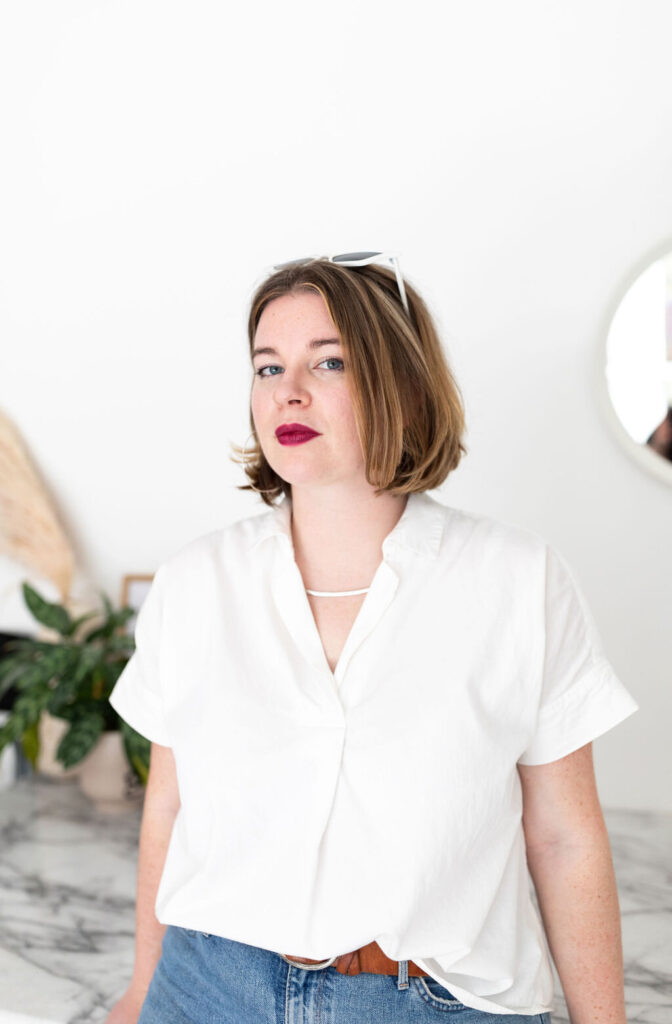
Tori Dunlap
Tori Dunlap is an internationally-recognized money and career expert. After saving $100,000 at age 25, Tori quit her corporate job in marketing and founded Her First $100K to fight financial inequality by giving women actionable resources to better their money. She has helped over five million women negotiate salaries, pay off debt, build savings, and invest.
Tori’s work has been featured on Good Morning America, the New York Times, BBC, TIME, PEOPLE, CNN, New York Magazine, Forbes, CNBC, BuzzFeed, and more.
With a dedicated following of over 2.1 million on Instagram and 2.4 million on TikTok —and multiple instances of her story going viral—Tori’s unique take on financial advice has made her the go-to voice for ambitious millennial women. CNBC called Tori “the voice of financial confidence for women.”
An honors graduate of the University of Portland, Tori currently lives in Seattle, where she enjoys eating fried chicken, going to barre classes, and attempting to naturally work John Mulaney bits into conversation.